Inclusive Products Start With Inclusive Testing
From Tejo's interview with Dr. Julian Sass, independent cosmetic chemist
Ask a founder whether their new foundation or tinted sunscreen is inclusive, and most will say yes. Ask how many deep skin tones it was tested on, and the answer often gets quieter.
Dr. Julian Sass sees that gap from the lab. Julian is an independent cosmetic chemist with a PhD in biomathematics and statistics who spent years working on clinical trials before a brand asked for help explaining its science to customers. Today Julian helps brands develop formulas and make sense of their clinical data.
Some shades are harder to make than others
Take mineral sunscreen. Its main UV filters, zinc oxide and titanium dioxide, are white pigments, the same ones used to make white paint. For lighter skin tones, a formulator only needs a little tint to balance that white. For deeper skin tones, they have to add much more pigment, and that leaves less room to adjust for warm or cool undertones.
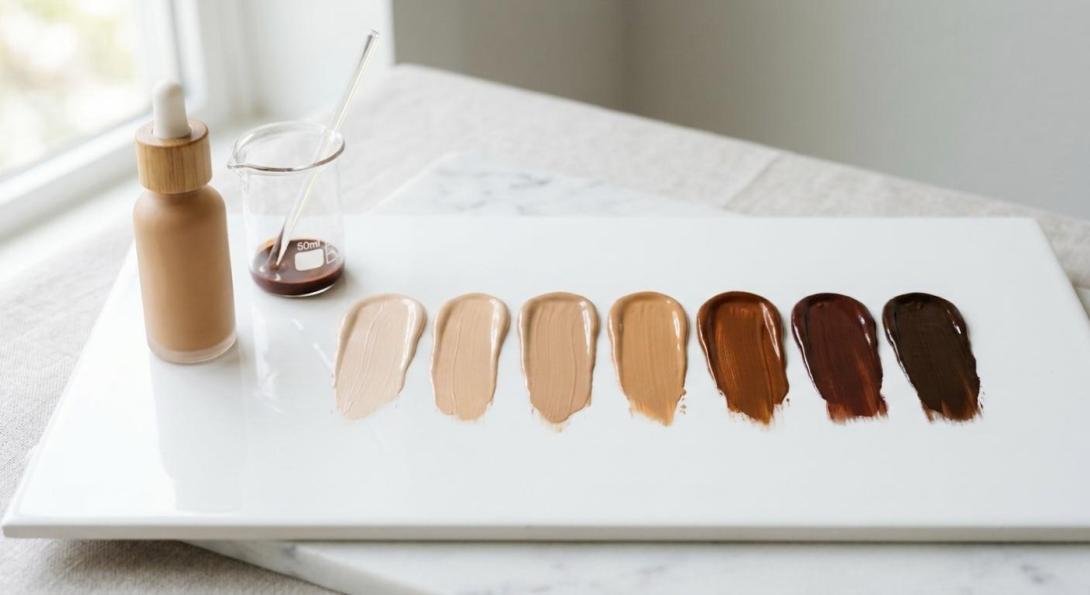
That's why Julian says one “deep” shade isn't enough. A truly inclusive range needs several deep tints, spread out as gradually as the light ones. A common mistake is a 30-shade range where the first 20 are variations of light skin and the deeper shades get squeezed in at the end.
If you can't do it well, don't fake it
Julian's advice for brands on a tight budget is honest: focus on the people you can serve well. A small range that knows its audience is better than a deep shade that looks wrong on the people it was meant for. When inclusivity is done badly, Julian said, it feels like a slap in the face, and those customers rarely come back.
“Your products don't have to be for everyone, but don't pretend that they are.”
— Dr. Julian Sass
For brands that do want a wide range, the work starts early. Julian recommends talking to makeup artists who work across many skin tones, building benchmarks from the products they trust, and testing every shade on the people it's meant for. It also means forecasting demand by shade, so you aren't left with stock that never sells.
Diverse testing takes planning
The same problem shows up in clinical studies. In Canada, the US and much of Europe, recruiting enough participants with deeper skin tones can add weeks to a study and a lot to its cost. Julian has worked around this by running studies with labs in South America, especially Brazil, where people with a wide range of skin tones live in a fairly small area.
Where a study runs matters for another reason too: climate. A dark spot or anti-aging study run during a Southern Hemisphere summer means far more UV exposure than the same study in a Canadian winter, and that can change the results. Some brands run separate studies for lighter and deeper skin tones, so they can show clearly that a product works across both.
Key takeaways
- Mineral sunscreen's white pigments make deep shades harder to formulate.
- Spread shades evenly across every depth, not just at the light end.
- If you can't serve a skin tone well, don't pretend your range does.
- Test every shade, and every claim, on the people it's meant for.
Work with Tejo
This is the problem Tejo is built to solve. Because our efficacy studies are remote, panelists can join from anywhere, not just from near one clinic. That makes it easier and more affordable to include a wide range of skin tones and get before-and-after results in 5 to 10 weeks. If you want proof that your product works on everyone you're selling to, book a call with us.
Full interview transcript
This is the full conversation between Rachel Baker, founder of Tejo, and Dr. Julian Sass. The transcript was computer generated and lightly cleaned up, so it may contain small errors.
Rachel Baker: Okay, I'm starting recording. Start. Awesome. Okay, thank you so much for joining me today. I really appreciate it.
Julian Sass: Happy to be here.
Rachel Baker: Yeah. So, Dr. Julian Sass, love the last name, by the way. Why don't we start off by talking to me about your background and what drew you into the cosmetics industry?
Julian Sass: So I joined the industry fully by accident. It was not my intention at all. Seeing students now at like 17 saying that oh I wouldn't be a cosmetic chemist to me is insane. Just like what are you talking about? I didn't know that this job existed until I was in my like mid20s. So my initial background is actually in math. So I started out did my degree in math then I did my PhD in biomathematics and statistics and was focused on more like infectious diseases. But a lot of my work was focused on clinical trials and clinical testing. And so I had started to talk about like online just breaking down kind of the science and studies behind different ingredients based on my background as someone who does clinicals and that was like a big part of my work is looking at biological data and was talking about that online and a brand like found me from my work and said hey we like what you're doing we would love to have you consult with
Rachel Baker: Oh,
Julian Sass: Us on how we communicate our science to our customers because they were a very like sciency brand and so I was like okay sure I'm a grad student I have no money
Rachel Baker: Heat.
Julian Sass: So I'm happy to I'm happy to do that and so started working for this brand as as a consultant and then I was finishing up my PhD I was thinking okay I have a posttock opportunity lined up in New York working in my field which is looking at pediatric infectious diseases. So I could either work in this very important but depressing kind of field where like we're helping children get healthy but we were doing lots of animal studies, there's lots of sick children. It's a lot of work. It's and it's it's it takes a certain amount of resilience to kind of like do that day in and day out. So that was like lined up for me. But then I had this opportunity in the cosmetics industry. I'm just thinking, well, this is more fun. And it's still intellectually stimulating and I'm just thinking, okay, but like am I qualified for for like any jobs in the beauty industry? So then having them basically offer me a job and say, hey, we would love to have you full-time because I told my boss like what I want to do, I don't know if I'm qualified to do and what I'm qualified to do, I don't really want to do. And they were like, no, we'll we'll we will have you on and like you will learn on the job. And I was like, okay, great. So first job out of grad school was work working for a startup skincare brand in R&D and education. It was a lot. I learned a lot. It was really like being thrown into the fire like immediately and it was so much work. I learned so much. But I'm so glad that I did that because it just gave me this intro into the wild world of the beauty and industry and really introducing me to so many different things cuz like working with R&D, formulation, regulatory, packaging, quality, just manufacturing in general. It was a lot in a way that I wouldn't get if I was at a big multinational core corporation where you really kind of get siloed or if you're at a manufacturer, you really just focus on that corporation aspect. So I was able to get a lot of experience on a lot of different things just being one of very few technical people who was at this brand. So was very very happy that I transitioned. So, I I do miss math sometimes, but I could not be happier to now be doing beauty full-time
Rachel Baker: Yeah, that's really cool. So most of your like I guess background with respect to cosmetics is like R&D, claims analysis, creating new innovation formulas, that kind of thing. Very cool.
Julian Sass: 100%.
Rachel Baker: So when you look at a new product, what makes you think, "Wow, that's Really amazing.
Julian Sass: For me, there's kind of like two things that I'm like mainly thinking about. So like anything that is very interesting from a technical perspective like if it's a new ingredient a new way of delivering an ingredient and that can come from lots of different places because sometimes it is the ingredient suppliers are really bringing that innovation now it's oh I'm seeing it be commercialized finally it's okay great because when you're on the formulation side we see ingredient innovations like maybe 2 3 years before it starts to like really get commercialized. Like I remember with like PRN and Exosomes and this kind of stuff was very very new and was first starting to be introduced but now they're everywhere on the market. So it's like okay things like that. So seeing new technologies commercialized I think that is really cool. The other thing is kind of both with formulation and also with packaging is just like new formats of doing things that make things easier for the consumer. There are lots of things that get launched that are what I call just like innovation for the sake of being different where it doesn't make things better, it just makes things different that doesn't necessarily give any kind of benefit for the consumer. But meanwhile there are things that have like meaningfully like changed a category that's like oh this is interesting. You know an example of that is if you look at cleansing balms which for a very long time were traditionally these what are called hot pore products where you have like a I want to say molten but it's like it it's a melted fo for formula. You pop it into these jars. They're cooled and you put your finger in and then you you scoop it out and then you cleanse. Now that so many brands have launched new products that have been coming from the raw material side where you're able to get that kind of efficacy, but it's not in a balm format or like a solid cleansing oil format. It's like, oh, it's like it's a balm in a tube where it's like, oh, I'm able to just like squeeze this out and still get that cleansing efficacy. It's a it's much harder to bring those to market just because dealing with heat and sealing tubes, like there's lots of technical stuff that like goes into that that people don't think about. They try and do this. But things like that where it's like, oh, like you thought like, oh, people don't like putting their hands in jars. Now we have an opportunity to have the same performance but now it's in a tube. And just even something small like that is we go that's interesting because you've taken this category and improved it in order to make things easier for consumers. Because I I think that that is who we serve at the end things easier for the end consumer and you just have something that is like oh it's different cuz it's different but it's like yes it's different but it's not better in any way for the average person to use. So those are really the things that I love to focus on. So anything that's like new, interesting from like a technology perspective that has clinical evidence and that's like really really cool that's able to, you know, bring results in maybe a different way or is in somehow is in some way easier for consumers to use. I think that those are the things that I I really really focus on and think that oh this is interesting and I want to buy this or you know third thing if it smells good because I'm a sucker for a fragrance.
Rachel Baker: Hey, that's great. So like conversely, is there anything that like you feel like is kind of like a a step in the wrong direction?
Julian Sass: How long do we have? No, I I think that there are a lot of things that to me, I don't want to say that they're bad formulas all the time, but are things that I just feel like you have to focus on. I mean, even just like base level stuff like making sure that your product is stable and is not going to separate when it's sitting on the counter because there is no like universal standard for how your product has to be tested for stability to make sure that like it's not going to like separate on you or anything like that. There are there are ways that are standardized in the industry, but there are a lot of brands who will skip that in order to have speed to market.
Rachel Baker: Mhm.
Julian Sass: And I think that anything that makes a consumer, it's like, oh, this is separating. And then I've seen brands get defensive sometimes like, oh, you just need to shake it or whatever. And I'm like, this is a lotion. You should not have to shake it. What are you talking about? So, just not taking the time to really focus on making sure that your product is not going to either separate or get moldy or anything like that is is to me really important. And then just the overall sensory and textural experience of a product to me is so so important because I feel like there is a tipping point where a consumer will deal with an unpleasant texture and unpleasant smell in order to like get efficacy where it's like okay like there there's some kind of like a a nexus tipping point where it's like all right this must be amazing for me to put up with this horrible texture or it's really greedy or it smells bad but my skin looks amazing when I use it. So when when when those things are like out of balance where it's like oh it smells bad and it doesn't feel nice and it doesn't really work so super well then it's like okay guys like what are you doing? So that that that I don't love and yeah those are those are my like main things. You know there are a lot of products where I think you know this will be for somebody. It might not be for me but it can be for me can but it can be for somebody but I think that when you have things that are an unpleasant consumer experience period and don't have the efficacy to either back that up or even from a cost perspective because you know people will put up with a lot if it's cheap. Like if you got like a a $3 lotion, it's just like, okay, this isn't great, but it was $3. Who cares? But when those things are out of balance, that's what really tends to bother me where it's like this wasn't made with a consumer in mind. This was made because she wanted to make money versus like, oh, I want to make a product that is actually enjoyable to use or that people like will not dread using versus I want to make this so I can get it on on a counter and sell it.
Rachel Baker: Right. Yeah. So what should brands do to make sure that like that whole sensory experience is delightful?
Julian Sass: I think that what is what a shocking number of brands do not do and when I learned when I started working I was shocked is when you are getting samples from your chemist or your manufacturer or whatever test things out for a decent amount of time. I understand that speed to market is important,
Rachel Baker: All
Julian Sass: But even things like I'm I'm sure you've had this happen when you have a product that's like in a pump and you pump it out and maybe once you get to like like half of it left or like a quarter of it left, but it's like, oh, nothing's coming out of the pump and anymore because the product is thick and the part of the
Rachel Baker: Right.
Julian Sass: Pump has just kind of bured a hole in it and you got to like bang it on the counter every time that you want to get something out of it. Like just that aspect of it is just like could you like is it not clear that this needed to be in a jar or in airless pump that has something that is like moving up and pushing up product. So just things like that and using the product in that packaging to make sure that everything works as intended because you can avoid so many consumer complaints by just spending that little bit of extra time to make sure that the packaging makes sense for this product. You're able to get all the product out to cut this open as you're using it. If it's like, oh, you know, I've been using this and like after a while this may start to get like thicker in the jar. What's happening there? Or it's like, oh, it's starting to separate. What what's happening there? You know, this all those sensory aspects in using your products is just really, really, really important to just show that you care really and that you're putting the work in to make sure that what you're putting on the shelf or on your site is like the best thing that you want to do and that you are like proud of versus just like, okay, well, we we did it cuz we need to have something that was on the shelf before Boxing Day. Like, that's crazy.
Rachel Baker: Yeah. Yeah. So have you seen situations where there's formulas that work really beautifully in the lab but don't necessarily work as like end products? Like do you want to share
Julian Sass: Oh, all the time. All the time. There are so so the there there are people whose entire job is literally taking a formula from lab scale and bringing it into prep into production because there are so many things that we can do in the lab that do not work well when you scale them up or are very very complicated to do as you scale up. There are so many complexities that get added that make things a lot more difficult and complicated. An example is just like mixing speed things like like that. So, let's say that you have that you're trying to like dissolve in water and you have to and you have a standard like kind of propeller mixer that can go in and spin very very fast and it's like okay like like oh I have to spin this really really fast in order to get this to dissolve and break down. It takes a long time but we're able to do it. When you take that from a 100 mil beaker to like a 500 kilo tank, you don't have anything that can mix that fast out of in this enormous tank. It's like it it like you don't have the speed to be able to mix
Rachel Baker: Oh yeah.
Julian Sass: Something at that level at that speed. So it's like okay we got to take a step back and think how is this going to go into production because that's how we have to formulate. I was talking to a process engineer literally this week about this exact thing because when you're in the lab you can have lots of side beers to like predesissolve things and and whatever. You can have things at high speeds, but like let's say you have something that requires like three different side beers to like predesolve different materials in production. That's time. That's money. That's that's you you got to have people who are on the floor moving. Moving kettles, adding things to things, letting it sit, moving more things in order to do that. Like that is time and money. And a big part of production is labor and time, not just raw materials. If you have a product that in the lab is beautiful, but it's this very complicated process to put together, then when you go to manufacture, like that facility has to block off a time to get this done. And if it takes a long time to put together, then you're going to be paying more money when you could have optimized your formula for production where instead of this whole thing taking like a whole day, it takes half a day be be because you formulated and thought about how it's going to be produced before you actually finalize what this formula look looks like. Because something that I've told to my clients like listen you can get whatever you want if you've got the money because it's it's like like listen I if you're going to be doing a lot of units and you're going to be making this manufacturer a lot of money making lots of refund orders and that's great but if you don't have the money to now pay all this staff to put this product together that's very very complicated then it's hard and I think that just just in general the art of making sure that the materials that you choose and the way that you formulate is done not just for the lab but for how things are manufactured. That is when you have like a really like top tier chemist when you're thinking about not just how it works in the lab but also when this moves to production when you know that each line in in your formula is a person. Now, dumping this material into a vat and mixing this up at low speeds where you don't have all of the same equipment that you do in the lab, then it really just makes things a lot easier and smoother to scale up because it's very very common for a chemist to do a product. You give it to a manufacturer, manufacturer says, "Hey, this is going to be complicated because of XYZ reasons." and then the manufacturer has to make tweaks. Now what you've made in the lab is no longer what's happening at formulation scale. And this this mainly happens when you're working with an independent chemist versus the manufacturer doing it because when you're working with someone that is like, oh, the manufacturer is doing the formulation, they know what all the equipment is. And so it's like, okay, I know that this tank that is in the same building as where I'm working, it works at this way with this equipment, whatever. So, it's a lot easier. But when you're doing something that's very customized, then you have to make sure that your chemist and your manufacturer and your packaging and whatever is all in sync. Because if not, you're just going to add so much time and so much money in order for you to actually bring this product to market because it is a very complex system when you're trying to bring something to market. I think a lot of people think it's very easy because not so many people have brands, but it's very complicated. It's a lot of work and a lot of time. Make sure that everything is done right and you don't waste a ton of money.
Rachel Baker: That makes sense. So, you you talk about a lot of different problems that can happen in production. How as a formulator do you optimize that formulation for manufacturing? Like what does that process usually look like?
Julian Sass: That process really can like it starts out with talking to the manufacturer step one because like for every manufacturer who I work with, I have like a cheat sheet of what their manufacturing equipment looks like, how big their kettles are, and just knowing how they work. Like even something as simple as okay, when you're working with something that has to be homogenized, which is basically like using an industrial like immersion blender essentially. Is that something that they have where it's like a drop in where you have your tank and you drop it into the tank or is it inline where basically you have because you'll use this to combine your water and and your oil where they have basically a tube where your oil comes in and it mixes with your your water and it goes through this like high pressure tube and gets homogenized that way and there's homogeniz that is like inside of that tube. Even things like that and understanding what all their equipment looks like is super important and knowing what their capabilities are because there are places that don't have access to certain kinds of equipment so that you need to know what they're working with. So that's step one. And ideally being on site, going to the manufacturer and seeing what the setup looks like is invaluable to see, okay, how do you all like to do things? Because I think that when you're working with a manufacturer who's going to be like your main partner, I think it is best to work in your manufacturer backwards. So talking to them, seeing what equipment that they have, and also seeing what ingredients that they keep in stock because one of the most annoying things is sourcing anything, packaging, raw materials, anything. Like packaging will take the longest by far, but ingredients also have lead times and can take a long time to get to the manufacturer. So even for me as a chemist talking to the manufacturer and saying hey you know what different preservative systems do you keep in stock and so if it's something that I know I can use for this product I will just use that versus potentially going outside of what they have in stock and looking at something that is very different and then going oh now I've sourced this specialty m material that now they have to go get in touch with the supplier place an order it has to get shipped there and that can take weeks or months versus formulating more for that manufacturer where you can tailor it to what they have in stock what they like to use and saying okay can I get this formula done with what they have and sourcing minimally from external things. Like my ideal formula is made mostly with stuff that a raw material supplier will stock or sorry that a manufacturer will stock. And then if we're looking at activis or anything specialized, we're only sourcing a couple of materials from externally. That's the ideal situation because you're making it as painless as possible for the people who actually have to put this together while obviously also maintaining, you know, that your client is getting what they want because that is the most important thing. But making sure that you're able to do as much as possible with your manufacturer, knowing what their equipment looks like, and thinking about that from jump will just make the process so much easier of actually bringing something to market.
Rachel Baker: Yeah. So a lot of formula for formulators like work inhouse with like a particular manufacturing facility but your consulting practice is kind of different where you
Julian Sass: Mhm.
Rachel Baker: Act independently. Can you talk about about that decision and like if this is like how this this can help a brand maybe make a a better decision with like which manufacturer to to pick. And Yeah.
Julian Sass: Yeah. Yeah. I think that the advantage that you know, okay, so when we're thinking about how to bring a product to market, you really have three options as to how you can do this market. You can either go to a manufacturer that does private label or white label where basically they have, you know, a suite of formulas for you to choose from, sweet of packaging that you can choose from and you say, "Okay, I want this foaming facial cleanser in this pump." You can customize your labeling up to a certain extent, maybe add a fragrance, maybe add a color, whatever. But the base of the formula is pretty much the same across market. The advantage of that is it's only a lot faster. It's a lot less expensive than the other options that I'll talk about. The downside is that you don't get that intense customization and you don't own that formula. So, for example, if you have a a cleanser that you're with this private label company. If that company goes out of business, you have nothing because what you're basically doing is licensing to use this formula and sell it under your brand. But if they go out of business or if they stop making it or if raw material goes out of stock or gets did discontinued and they have to make a change, you have no control over what those changes might be, which I've seen happen several times where it's like, oh my my clients have gotten so used to this product, but now it has to change because manufacturer changed it because this part of it is no longer being produced. So that's the the downside there. The kind of middle ground is when you're having your manufacturer create your your product. So this is where you get customization where you will have a brief of your product where it's okay, I want it to feel like this and behave like this and smell like this and do all of this stuff. And you go to the manufacturer, they'll go they'll create something bespoke for you that might be a base that they have that's been tweaked slightly that or it's just like fully starting from scratch and you're able to work directly with them. It's all with their own equipment. And so this is probably the most like common and streamlined option because you're able to go to them, you're able to get something custom, but again, you still don't own that formula because it's the manufacturer that owns that formula. So you might So you'll have the ingredient list, like you'll have what's in it, but you won't have the full recipe of how it's put together because the manufacturer is who owns that. Now, for most manufacturers with with this kind of system, there's usually a level of either the amount of money that you've paid or number of units to purchase from them or after you've made them x amount of money, then you can buy the formula or they'll give it to you after x amount of money. But, you know, that's tens of thousands of dollars usually in order to own that formula. But that's usually an option there. Then the most expensive but most customized option is working with someone like myself where you have an independent chemist who's making your formula and in that case you will own the formula at the end of that process like it is yours and you can go to whatever manufacturer you want with this product. I don't work necessarily like that because I have all of my clients lock down a manufacturer before I even start working so that I know what materials that they're able to stock because I don't want to make it so that they have the source of of money like I already said. So the advantage is obviously that customization, that formula O ownership, and you really get to get in the weeds into this process. Whereas when you're working with the manufacturer, you're normally like capped at like maybe three iterations. And even for me, like I cap it at three, but if we if you want to go further, it's a fee to go past that, but we can keep on going so we get exactly what you want. Because that's really what I want for all of my clients is to have something where it's like okay I have made this and it is exactly what you had in your head like this is the vision that you had that's ideally what I want and when you're doing everything independently then you have lots of different things you have to juggle like dealing with packaging regulatory ingredient sourcing all of this stuff that has to happen when you're doing things independently where It makes it a lot more complex, a lot more expensive, but you have the benefit of getting exactly what you want ideally and owning that formula. Whereas if you are scaling to the point where it's like okay we need to have another manufacturer that's you know on the west coast for example it's like okay like if I'm doing everything in in Toronto and we're making a ton of money it's like okay maybe it's better if we have one in Toronto and one in Vancouver where it's okay we're having one on the east coast and the west coast can make shipping easier logistics easier all those things if your manufacturer owns that formula you can't do that but if you own your formula then you have that flexib ility to be able to go, hey, I also want to have this made at this other place as well. Or if I want to do something that's in Europe or the states or wherever, you have that flexibility because that formula is yours. But like I said, much more expensive and much more costly. So you have so many different ways that you are able to bring something to market and it's a matter really of how much customization that you want and also how much money that you have access to because when it comes to kind of my like trifecta of customization cost and speed, you got to pick two and that's it. Like you you cannot get something that is exactly what you want. It's going to be fast and affordable. That's not going to happen. So, you really have to figure out, okay, like what is most important to me? If it's speed to market that is most important to me, doing that private label is probably going to be your best option. If like cost is important, either private label or working directly with the manufacturer is going to be your best option. If customization is most important, then working independently with a chemist and kind of outsourcing all aspects of that and kind of cobbling it all together for yourself is going to be your best option if you're able to afford it.
Rachel Baker: Yeah, that makes sense. If you if you can afford your own formula and I'm I'm assuming also if you need to go to that you know separate manufacturer on the West Coast and they have a different preservative on file you would that you could help reduce the manufacturing cost there by maybe tweaking the formula so that they use the the different preservative but it has the same kind of stability.
Julian Sass: Yes.
Rachel Baker: Is that is that common practice or am I just sort of
Julian Sass: So, so, so generally you will want to have the same like actual ingredients like on the label no matter where you're you're manufacturing.
Rachel Baker: Okay.
Julian Sass: But what you can do is if let's say if it's a more of a commodity material for example like let's say you have a green tea extract let's just say where okay this supplier gets theirs from this place but then for this other main manufacturer they get theirs from this other place and when you look at the certificate of analysis and all of your data it's like okay these should be comparable then we're okay sourcing this from different places. So that kind of thing is very very common. We were able to source ingredients from different places depending on relationships depending on geographic ease where your actual formula is the same but it's it's like instead of getting our like flower from X store, we're getting it from this other store. And you've got to make sure that like, okay, it performs the same way in the formula, but it's easier for us to get where we're located. So that kind of geographic kind of thing for more commodity materials is very very common for sure when you don't want to have to source, you know, this exact kind of plant extract. You're doing something that's just for a claim or even you have some materials that are from different suppliers but are the exact same raw material then having those coming from from different places is not a big deal. You know there are things like a very common lipid that we use in a lot of moisturizers is capri capri triglycerides different preservative systems but like getting something like that from any supplier is going to be very very similar looking at you know the ratios of of of your different hydrocarbons etc like that kind of stuff as long as it's like looking the same
Rachel Baker: Cool.
Julian Sass: On paper but just coming from two different places then making that swap to making things easier on the manufacturer is very very
Rachel Baker: So, shifting gears a little bit, I know a lot of what you you talk about is like especially with respect to sunscreens like inclusivity in in formulation and product design. So, what should brands be doing to make sure that their products are actually inclusive?
Julian Sass: Inclusivity.
Rachel Baker: What aren't they usually doing? Like, yeah.
Julian Sass: Inclusivity is hard and inclusivity costs money and that's the hard thing. My like eternal opinion about this has always been your products don't have to be for everyone, but don't pretend that they are.
Rachel Baker: Right.
Julian Sass: And I think that's my biggest thing more than anything because for example, if you're trying to launch a tinted sunscreen that works for a wide range of skin tones, that is a great idealistic vision to have. However, if you don't have trusted voices across those skin tones, we're able to test that product and make sure that it actually behaves how you want it to behave and you're able to have the money to have, you know, let's say six different formulas for this product with all these different tints, then having those initial shades and just saying, "Hey guys, like this is who we're focusing on because that's what we're doing. That's what we can afford." is going to be better than spending the money on darker shades that don't actually perform well on deeper skin tones because there is so much that goes behind the curtain around having all these different shades. Like for example, if your brand is mainly targeting like lighter skin tones and then you have this product that you're like, "Okay, we want to be inclusive." Then we've done this. You have all these shades. The problem comes in when you might have these shades, but they're not selling as quickly as your other shades or in your community,
Rachel Baker: Mhm.
Julian Sass: But you've had to pay all this money to get all these extra shades. And now you're sitting on thousands of units of product is not selling as quickly as the other shades. Then what you also have to remember is that not only are you looking at like inventory, you're looking at relation cost. And you have to think about, okay, if I have this formula, how long can I keep it before it goes bad?
Rachel Baker: Yeah.
Julian Sass: Because if I can't sell through this before it all goes bad, I wasted this money in order to be inclusive. So, it's something where I understand the goal and it should be a goal for all brands, but I also am very practical and understand that inclusivity takes a lot of time, intention, and money. And if you don't have the funds in able to make this and be able to do it and do it well and make sure that all of your stuff actually performs well on different skin tones, then it might be better to not. But the the kind of pitfall that a lot of brands fall into is that, oh, but we want to be for everybody. Just like, but you don't have the money to be for everybody. Because I think this happens a lot with color cosmetics. So like complexion products, so foundation, concealer, etc. And also with hair. Hair is a really big thing where like a shampoo, conditioner, styler routine that's going to work for my hair would not work nearly as well for your hair. Like you would you would look like a wet seal like coming out of the earth if you use stuff that I have for my hair. It would just it would weigh your hair down so much. So and and that's just a fact of life. And so it's like okay if if you are going to go through all of the rigma roll of having inclusive stuff make sure that you have the money and are able to market and make sure that the people who you are trying to reach are seen in what you're trying to do. Because if you are making products and you want to be inclusive, but then in your marketing campaigns and you're hiring models, etc., it doesn't reflect who you're trying to reach, then what was the point? And it's like, okay, you you've done all you've done all this stuff. Like, I've seen brands who've launched like, oh, we have this like inclusive hair care line. We have, you know, all these different, you know, hair textures, whatever. But then when they do the campaigns, it's not people who have all these hair types. So I'm just like, what was the then? So I I think that making sure that your money makes sense in order to have all these different variants of of inclusivity that you know who's going to be buying these products and you're able to actually reach those people. Really, really important. And that you're able to market it well and talk about it in a way that makes sense for the people you're trying to reach. No, nobody wants to say like, "Hey, we're only really focusing on these skin tones." Nobody wants to say that. But if you're not able to do it well, it is to me better to just not do it than to do it and do it badly. Because when it is done badly, it feels like a slap in the face. Versus like for me, I can look at products and say, I know this isn't the this isn't for me. Oh, this has three shades, alabaster, white, and tan. Great. Not for me. I'm I'm aware that this is not going to be for me, and that does not bother me. But if they have attempted to do like, oh, here's our deep tint and on me it looks like peanut butter, then it's like, well, what have we done here?
Rachel Baker: Right. Yeah. I'm really curious about your thoughts on how brands should kind of hand like especially smaller brands who maybe don't have big budgets should handle kind of the racism angle, right? Because I think the reason why brands kind of do this non to inclusivity and do it badly is because they're really like a basic white
Julian Sass: Mhm.
Rachel Baker: Girl brand.
Julian Sass: Yeah.
Rachel Baker: And but like they also maybe don't want to say, "Yeah, our products are just for white people." Because that sounds f******
Julian Sass: Exactly.
Rachel Baker: Terrible.
Julian Sass: It sounds terrible. Nobody wants to say, "Hi, we're by white girls for white girls." You know, you don't want to do that. That's crazy. That that that's actually insane.
Rachel Baker: Yes.
Julian Sass: But I I think that you have to kind of be aware of what you're able to do effectively and well. And it does not need to be shouted out from the rooftops hashtag by white girls for white girls. Like you don't need to say that. But what you can do is it's just like I like like listen like we are focused on like wavy hair, straight hair, and that's what we do well because there are plenty of brands that serve all of these different communities. And your brand doesn't need to be a one-stop shop for everyone for everything if you can't execute it well. And I think that that's a really hard thing to tell to brand founders because I've had people say it's like, oh, we want this product to be inclusive and whatever. And then like listen, there are like chemical limitations behind what you're trying to do and why this is going to be a challenge. So for for example, if you were making a mineral sunscreen again, so mineral sunscreen, when you're looking at the actual raw material for zinc oxide, the main UV filter in mineral sunscreens, it's a white powder. Like it's straight up white.
Rachel Baker: It's a pigment like Yeah.
Julian Sass: Exactly. Like like that and titanium dioxide like those are pigments used for it to make white paint period. And so when you're trying to make something that is for lighter skin tones, you don't need to add as much iron oxide or tints in order to get this to work for a wider range of lighter skin tones. But as you make things for deeper skin tones, what happens is you have to add a lot more pigment to counteract that white. And what happens is that with all that additional pigment, your tint becomes less flexible. Because if you're starting out with white and you have to go from white to peach, it's like, okay, we didn't need to add that much. So, we have a decent range with this. However, when you made it really, really dark, it's like, okay, we've gotten to this like deep brown, but because of how much pigment we added, you don't have as much flexibility. So for again that inclivity to be done and done well, you got to have multiple deep tints because you can't just have deep and that's it. It's like, okay, what about the cool undertones? What about the warm undertones? I guess. So much that you have to think about versus, okay, we're going to add a bit of this to make it like a little bit orange to counteract the like whitish blue that kind of comes from the mineral sunscreens and this is going to work for a lot of lighter skin tones and we got to call it a day because if you are going to like work with people with deeper skin tones, try it on people, see how it works, make sure that you're doing an like an inclusive job, then to me I think it is better for brands to focus on what they do well than try and do it and they don't know if they can do it well because they're not tapped into that community and what these products need. Because when you're like if you're like relying on a manufacturer to make you a dark tint for something and you don't go and test it on people with darker skin tone to see if okay is this actually makes sense like is this a pigment? Like there was a brand that closed I think a couple years ago called Youthforia where they had a foundation shade that was straight up black. Like it was black iron oxides and that was the tint. I'm just like this is not a human skin color. What is wrong with you? So things like that where you have to make sure you're working with the right people and doing it well because it can be done. But if you are financially in dire straits and you don't have the capital to be able to do this and do it really well, then I do not think it is worth the investment to try and gain that community if you're not ready to put a ton of money behind making sure that it's done well because it is so much harder to do it. People try it and then they complain and now they completely turned off on from your brand because it feels like you were just trying to do it for the sake of being inclusive versus doing it because you actually want to serve these communities.
Rachel Baker: Yeah, I love that. So, okay, let's take we we've talked about like small minimal budgets. Let's say somebody has like all the money in the world and wants to make like a super inclusive brand. Like they're Rihanna, you know. How do they go about doing that?
Julian Sass: I mean that that really starts from going to manufacturers who like if you're looking at makeup for example people who do color cosmetics well you know the the things that the the best color things that are done are it's like a vary between your product development person, the manufacturer and also like working with makeup artists is really really helpful in the development stage because they are the people who have hands on. Faces all the time and have tried so much stuff. So even in the development phase when you're thinking about your benchmarks and for people who don't know about benchmark, this is where you think about what are the comparable products on the market to what I'm trying to create because listen, as much as people want to think that they've reinvented the wheel, the wheel's been done. There's 8,000 wheels were on the shelf at any store. So you have not reed the wheel. So in that market research phase, it can be talking to makeup artists like if you are talking to let's say like 10 different makeup artists who work with people across different skin tones, understanding what they like to use on clients, what works well for them in the chair, what they have found success with, building your benchmarks based off of that, and then saying, "Okay, we want super inclusive brand. We want to have x number of shades. Here's all of our benchmarks for all of these different kinds of shades and it might be like an entire line from a brand where it's like here's how we want this to perform. That's how you're able to do that and taking the time to do that market research to understand what's actually good and working well versus just saying I want to have 30 shades, you know, going from light to dark and that's it. It's like no, like you need to understand like how those shades need to differ, what the spread of shades need to to look like. Because one thing that a lot of brands kind of get dinged for when they say, "Oh, we're so inclusive is all right, if you're going from like 1 to 30, but then 1 to 20 is variations of white girl, and then only from 20 to 30 is where you get to like, okay, we we've got tan, medium, deep, deep kind of pushed in at the end." even make sure that like your spread of shades is like really gradual and makes sense and make sure that like you're serving a like you're serving a community at every single one of your shades. Super duper important. And when you're launching, you are inevitably going to have some shades that are going to sell more than others. This is one of the reasons why a lot of brands aren't always inclusive, especially when they're in retailers, is because when you have a lot of these brands, if you're like in a majority like white environment, the shades that are lighter are going to sell better. And then the retailers don't want to stock this because you're going to have different turnover rates for all of your different inventory. So making sure that you also know o okay based on my demographic or where I think I'm going to have my demographic then we need to make sure that we have a shade range that is not only like broad but you might have to tweak the numbers that you're doing of each one of your shades because you know how you're going to serve each of those communities and like who is going to be shopping at what they're trying to do because again in an ideal world yes we'd have the same amount for every single one but I've heard from so many founders where it's like okay we've made all these shades we did you know an equal amount for each one but these are selling well but these aren't selling as much it's like okay well maybe we need to do more of these and less of these and understanding that demand so that you're able to match that demand based on what you've at least forecasted it's like okay like I know that I might have more of the of of this shade and that's going to be different for every single brand. You know, if you are looking at, you know, a South Asian founder who's doing like a very like Ayurvedic color brand that's like, okay, based on this marketing, then I'm probably going to get more of these kind of like middle and deeper shades that are selling based on the marketing that we've done versus these little these lighter shades. We might need to get more of those because that's really who our focus is. So just understanding okay who is most likely to make these purchases how do I need to make sure that I am forecasting these sales and how I'm going to have my units done once I've gotten my shade range. So it is a lot more complicated than just okay we like Rihanna is our benchmark we we want our 30 shades of Fenty call it a day. It's a lot. It's a lot to make sure that you are not just wasting your money on making products that no one is going to end up buying, that are going to end up spoiling when they're sitting in a warehouse waiting for people to buy them because you want to be inclusive, but you didn't really understand what being inclusive means.
Rachel Baker: Yeah, that's good. So with like clinical studies do you find that there's an issue with like inclusivity and representation in like skincare studies.
Julian Sass: Oh yeah. Oh yeah. Definitely without question.
Rachel Baker: Okay.
Julian Sass: So this is a problem that I I found different ways of getting around. But if you're doing clinicals in like Canada, the States, or in parts of Europe, it can be very challenging to get participants across skin tones. And if you're trying to get on the Fitzpatrick scale, you know, looking at like one is lightest and six is the the the darkest, you're trying to get across that spectrum, trying to get things beyond like a two and a three can even sometimes be challenging and it adds time to the study because they're trying to recruit and get enough of this range to run your study. And there are some people who will say, "No, we need to have this ratio of this group. We have equal amounts for each part." Okay, well that's going to take a lot of time because we got to find people who are willing that have the skin tone because again they're real people. So the more inclusive that that that you want to be you're you're adding on time into how your testing is is done. You know the benefit is of course that okay we've gotten this watering the skin tones we have efficacy across this but it's going to cost you if not money then time. You know, one thing that I have really utilized is using countries in like South America and working with a lot of of testing labs there, especially in Brazil because in Brazil you have a lot of skin tones in a fairly small region and the facilities there are able to survey these communities in a really really good way because you have lots of variety in a fairly small area versus if we're looking at something like the UK Hey, the States, Canada, it can be hard to get these groups that are diverse enough to where you're able to kind of get something across skin tones without it without it
Rachel Baker: Mhm.
Julian Sass: Adding significantly to either the cost or the time. So, I've been able to make so many amazing South American contacts where it's like, okay, yes, we've run studies across different across different skin tones and it's not a problem for us and it's there. It's normal because it's much more common to have this variety of skin tones in these really small areas, right? That that's not seen as a problem or as an issue that is going to add in cost when you're trying to just have inclusive products. So, again, all things can come to to to those who have money is really what it comes down to.
Rachel Baker: Yeah. Like do you do you find working with like claims facilities based in South America, you run into problems related to climate? Because if you're selling into like the Canadian market, it's a lot colder, but it's also a lot harder to find people like especially with like very very dark skin.
Julian Sass: Mhm.
Rachel Baker: And so if you want to anyway, you can you can speak to that a little bit.
Julian Sass: Yeah. You know, I think that one big piece of it is thinking about when your study is going to be run. Like for example, if you're looking at pigmentation and you're looking at how if you have a product that's supposed to improve the appearance of dark spots over x period of time and you have to think about, okay, where is silly located? What is our climate look like? What is their like UV rays look like? Is it going to be somewhere where we have the same seasons that we have where it's like, okay, if we run this in in June, is it going to make sense? Or is it like fully in the southern hemisphere where the seasons are flipped? So being cognizant of okay, if I run this in their summer, my results are going to be skewed because there's a lot more UV exposure, but is that better? Because, oh, we put them in kind of the most UV intensive environment and maybe still saw improvement, then is that good? So being cognizant of all these things with with with climate, how it affects the skin, how it affects your results is also super important because running a study looking at anti-aging, for example, where where you have people that are exposed to to to the sun, running that in June is going to be very different than running it in December because those are going to have very different results because that UV exposure is going to affect what those end points look like. And again, is it smart things? A lot of people don't think about that, but you got to think about those things if you're really trying to like get results that are meaningful and understand that if you didn't get the results that you want, then it's like, oh, because I did XYZ things, this is why these results are not quite what I accepted.
Rachel Baker: Mhm. Yeah. Is there is there a way that you can do studies in in multiple geograph geographies at the same time? Like is that really okay?
Julian Sass: Yeah,
Rachel Baker: Like you Sorry.
Julian Sass: You Yeah,
Rachel Baker: Go ahead.
Julian Sass: You can absolutely do that.
Rachel Baker: What?
Julian Sass: You know, there are some facilities that are much bigger that have like study locations in multiple countries that you are able to that or just working with different facilities at the same time, but making sure that the protocols and the way that they're measuring things is equivalent. You know, for a lot of these tests, a lot of the equipment is not standardized, but is very like normal across different facilities. Like you're looking at things like hydration, skin pH, skin barrier, things like that is fairly normal as to how people are measuring it. So you can have something that's run, you know, in both, you know, in Argentina and also in Sweden at the same time and have it run and making sure that it's like, hey, we want this to be measured in this in this exact same way. We want this to be done in this way so that you can either combine the results or you have two different studies or what I've seen some brands do is say, "Hey, we're going to have one study for adjusting lighter skin tones and one study in darker skin tones so that we're able to see, hey, this is working across skin tones and we're not going to aggregate those results so that we are showing that we are serving these communities. We've done it in separate studies and said, "Hey, we know this works well on deep skin tones. Here are our results. Know that this works on lighter skin tones. Here are those results to again show how you are serving these different communities. And some brands are like, "Oh, but I don't want to separate that. Is that racist?" Like, no, you're just showing that this product is working across skin tones in environments that make the most sense.
Rachel Baker: Very cool. Okay. Thank you so much. I feel like I have so many other questions I'd love to ask you, but I also don't want to hold you hostage. So, thank you so this this is like you've touched on so many interesting points. And yeah, super cool. Thank you for being on. So, I'll I'll stop the recording if I can. Here we go.